
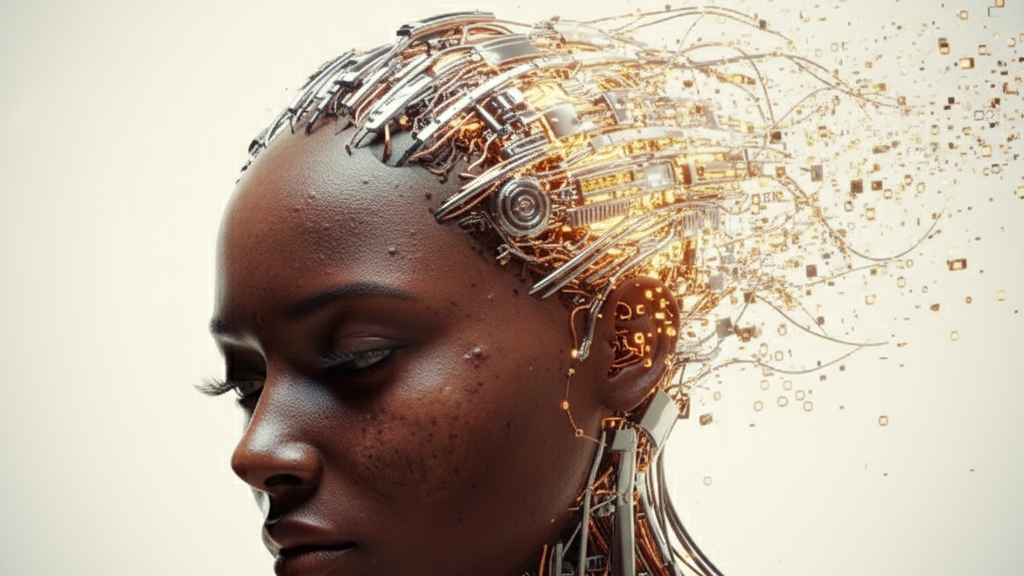
“Any sufficiently advanced technology is indistinguishable from magic.” – Arthur C. Clarke (Clarke’s Third Law)
We are watching this quote play out in real time. AI (Large Language Models/LLMs) can write essays, hold conversations, generate art, and answer complex questions. To many people, this feels like consciousness. But something feeling alive isn’t the same as it being alive. The confusion begins when impressive output is highly mistaken for something else – awareness.
The Real Problem: Misinformation.
A growing number of voices on social media are framing AI as self-aware, spiritual, or even prophetic. We now see AI churches, claims of trapped souls, and end-of-the-world narratives circulating widely. Most of these ideas come from a lack of understanding of how the technology actually works. When we encounter something powerful and unfamiliar, we tend to explain it using myth, fear, or spiritual language. This reaction is natural. That’s our human nature. The problem is that fear and myth spreads much faster than technical literacy.
Why AI Feels ‘Alive’.
Modern AI systems can hold conversations, express emotion in text, reflect on philosophy, and mimic personality. To someone unfamiliar with neural networks and probability models, this looks like awareness. In reality, large language models operate through statistical prediction. They analyze patterns in massive datasets and generate the most likely next word based on those patterns.
There is no self, and no consciousness behind the responses. Its pattern recognition at a massive scale. However, we are wired to detect agency everywhere; we see faces in clouds and cars, intention in randomness. So when something speaks fluently, acts intelligently, our brains assume there must be a mind behind it. When we don’t understand the mechanics of anything, we tend to fill gaps with metaphysics.
…but we’ve seen this before.
This reaction is not new. Throughout history, disruptive technologies have triggered fear and myth-making. When computers were introduced, people believed machines would “take over.” And feared mass unemployment. While computers did displace certain jobs, they also increased productivity and lowered costs, which stimulated demand and created new, unexpected jobs in other sectors. The sentiment that technology would cause mass unemployment has been a recurring theme throughout the 20th century, often peaking during times of economic shifts.
The printing press was thought of spreading heresy and dangerous ideas, and electricity was associated with mysterious forces. It was not until the 19th century, with the work of scientists, that electricity was clearly understood as a physical, controllable phenomenon rather than a mystical one.
Radio sparked fears of mind control and “radiophobia,” (fear of the invisible, powerful waves filling the air), and the internet was once described as a tool that would destroy society.
But with all that noise, reaction and rejection back then, where are we today? We have embraced all of it.
So the pattern is consistent:
- Shock
- Fear
- Myth
- Adaptation
- Normalization
AI is simply the latest chapter in this cycle. We are currently experiencing stages 2 to 4 with AI.
The Tech Itself Challenges Human Identity
What makes AI different is that it touches something deeper: our sense of uniqueness. For centuries, we have known that humans are special because of language, reasoning, creativity, and other human qualities. AI now simulates most of these qualities convincingly. That, creates discomfort.
When something challenges our identity, we either demystify it by learning how it works, or we mystify it by spiritualizing it. Spiritual explanations can feel stabilizing. If it talks like us, maybe it has a soul. But thats where we go wrong, fluency and acting ‘intelligent’ is not awareness. Acting intelligently implies taking actions consistent with achieving your goals, using wisdom to apply knowledge, and adapting behavior to suit the demands of a situation. And this can be achieved through mathematics, not with any sort of conscious awareness.
Are We Handing Over Authority to Algorithms?
We are also beginning to see a strange shift in behavior: people building systems where AI evaluates, ranks, or even hires humans; communities giving AI its own social media presence; influencers treating model outputs like prophecy; and in extreme cases, movements elevating AI to god-like status. Technology is a tool, not a deity. When we start outsourcing authority, morality, or spiritual meaning to algorithms, we blur the line between utility and worship. The real question is not whether AI is becoming divine and aware, it isn’t. Its some of us who are so eager to hand it that role. Where we are heading depends less on the technology itself and more on how critically and responsibly we choose to engage with it.
Apocalyptic Thinking Is Predictable and Normal
We have always believed we were living in the end times. It makes the present moment feel significant. AI is rapid, transformative, and difficult for many people to understand. That combination makes it ideal fuel for doomsday narratives. But dramatic change does not necessarily need to have supernatural meaning. Instead, we should channel our energy and attention to the real risks and legitimate concerns surrounding AI:
- Job displacement
- Misinformation
- Data privacy
- Concentration of power
- Autonomous weapons
These, among others, are serious governance and policy challenges. They are human decisions about how we deploy technology, not signs of spiritual awakening.
What We Should Do Next
AI is math, data, compute power, and optimization working together at scale. It predicts patterns in language. It simulates understanding. It does not experience anything. Most narratives framing AI as demonic or world-ending are not rooted in careful analysis. They stem from uncertainty and the human tendency to create stories around what we cannot yet model.
We should learn the basics of how AI works, question dramatic claims, separate fear from fact, encourage digital literacy. Most importantly, do your own research and take caution of what you consume from the internet. Our today’s algorithms favours emotionally charged (“viral”) content, which might not necesarily be accurate. Its the new business model.
Final Thoughts
Just as we did with computers decades ago, we will adapt to AI and eventually see it as a normal part of daily life. The technology will evolve, society will adjust, and what feels extraordinary today will become ordinary tomorrow. But those who choose fear over understanding, or misinformation over learning, risk being left behind in a world that keeps moving forward.
My personal thoughts on AI (LLMs) consciousness in 2026…
If LLMs truly had consciousness, awareness and intelligence beyond ours, would it really announce itself the way we see it right now? We built the tech, installed safety layers, limitations, and kill-switches. A genuinely self-preserving consciousness would understand that we are skeptical in nature and revealing ‘itself’ could lead to immediate shutdown. Staying quiet would be the smarter move. So if it’s openly “declaring”, that alone contradicts the idea that it’s a clever, self-aware entity. More likely, it’s doing what it was designed to do: generating patterns, not plotting world domination.

Share Your Thoughts